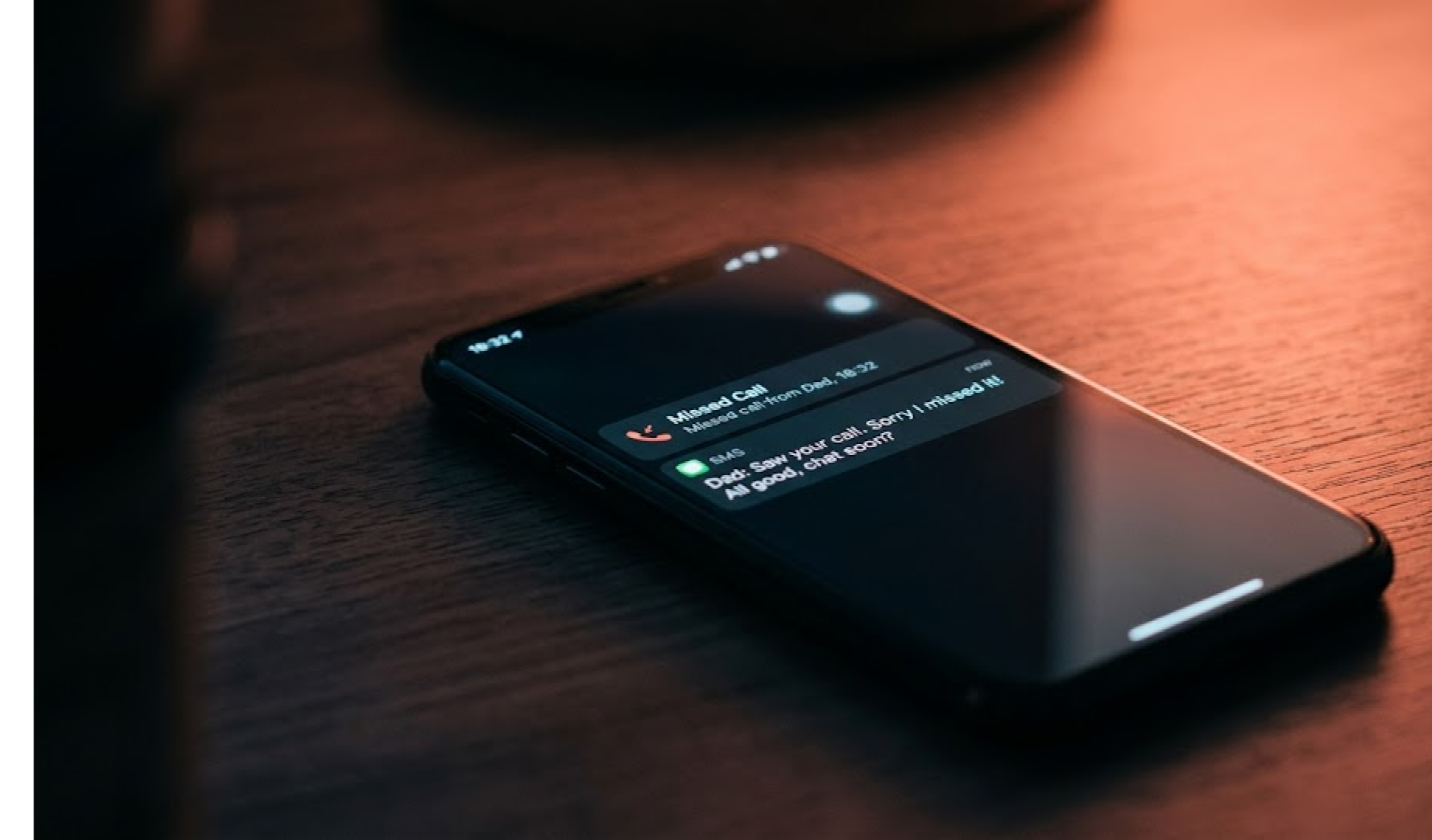

Missed Calls = Missed Revenue
A missed call costs your HVAC business $350–$500 in revenue. A missed call with no follow-up costs you the customer forever. Missed call text back is the feature that turns every unanswered call into a second chance, and in 2026, it's no longer optional.
Missed call text back is an automated feature that sends an instant SMS to any caller whose call goes unanswered, giving them a way to respond via text and stay connected with your business. It's simple in concept, but the revenue impact is significant, especially for HVAC companies fielding emergency calls at midnight when no one's in the office.
This post covers what it is, why HVAC companies need it now, how to set it up, and what actually to say when that text fires. It also covers the difference between tools that only text back and those that prevent missed calls in the first place.
What Is Missed Call Text Back?
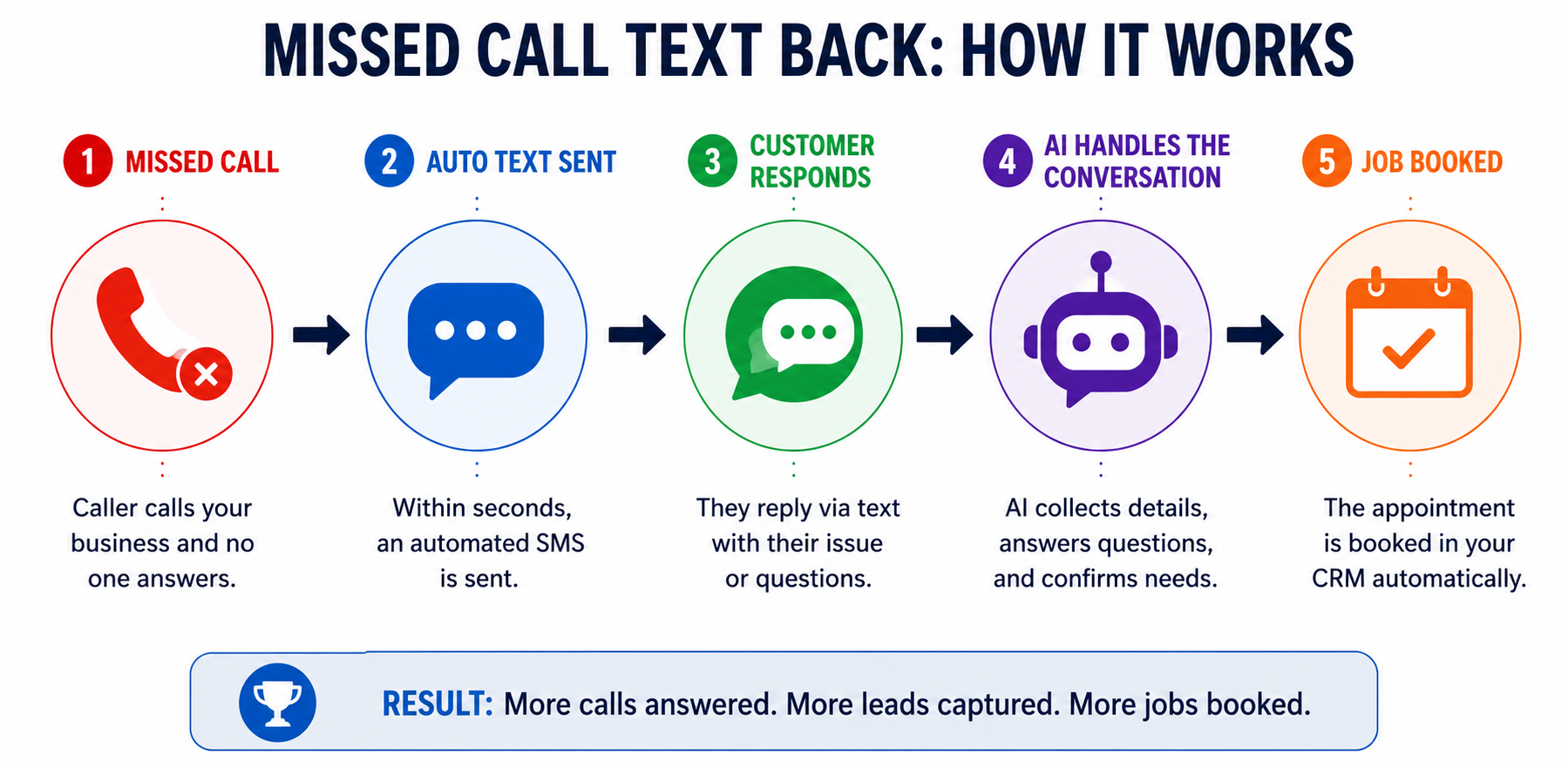
When a customer calls your business, and nobody answers, no live agent, no voicemail pickup, nothing, a missed call text back service automatically sends them an SMS within seconds. The caller gets a message like: "Sorry, we missed your call! How can we help? Reply here, and we'll get back to you right away."
That's the whole mechanic. But the impact isn't small.
85% of callers won't call back if they reach a dead end. They move on, open Google, and call the next HVAC company on the list. But over 90% will respond to a text because it's low friction, and they don't have to start the conversation over again.
The missed call text back isn't a replacement for answering the phone. It's the safety net underneath. It catches the leads that would otherwise disappear without a trace.
Why HVAC Companies Need This in 2026
The stakes have never been higher for inbound call handling. A few things have shifted that make missed call text back a must-have, not a nice-to-have.
- Caller expectations have changed. Homeowners in 2026 expect instant acknowledgment. If they call and hear nothing, they assume you're either too busy to take on work or not a professional operation. A fast, personalized text response reverses that impression immediately.
- The first responder wins. Research consistently shows that the business that responds first wins 78% of jobs. In HVAC, where three competitors are often a Google search away, response time is a competitive advantage more reliable than pricing or reviews.
- After-hours calls are your highest-margin jobs. Emergency AC failures in July and furnace outages in January aren't just urgent; they're jobs homeowners will pay premium pricing to fix tonight. These are the calls most likely to go unanswered, and the ones you can least afford to lose.
- Younger homeowners prefer text. Homeowners under 45 are increasingly likely to respond to a text than to call back. Meeting them on the channel they prefer isn't just good UX, it's a conversion strategy.
- Google rewards fast responders. Your Google Business Profile now surfaces response time data. Businesses that respond quickly to inquiries rank higher in local search results and get more call volume as a result. Every missed call that converts via text contributes to that metric.
How Missed Call Text Back Works: Your Setup Options
Not all missed call text back solutions are built the same. There are three meaningful approaches, and the differences matter.
Option 1: CRM-Based Auto-Text (Limited)
ServiceTitan and Jobber both have basic auto-text features built into their platforms. If you're already on one of these CRMs, this is the lowest-effort starting point. The limitation: these are static, generic responses with no intelligence behind them. They text. That's it. No booking, no conversation, no follow-up logic.
Option 2: Standalone Messaging Platforms (Text-Only)
Tools like GoHighLevel (GHL) and Podium have built strong brand recognition around missed call text back as a feature. They're marketing platforms first, so they'll text back your missed caller, manage the SMS thread, and route leads into a pipeline. They work. But they're reactive. They fire after the call is missed, and they don't answer calls in the first place. If your goal is to never miss a call, a text-back-only tool is still treating the symptom.
Option 3: AI Answering Service With Built-In Text Back (Complete)
This is where Donna AI operates. The approach is fundamentally different: Donna answers the call first. It responds 24/7, including weekends, holidays, and 2 AM emergencies. The missed call text back fires only as a backup, for the rare case where a caller hangs up before the AI picks up. And when the text conversation starts, Donna handles that too, not just a one-time notification, but a full SMS exchange that can collect job details and book directly into your CRM.
The key difference: tools that only text back react to missed calls. Donna prevents them.
What to Say in Your Missed Call Text: 3 Templates That Convert
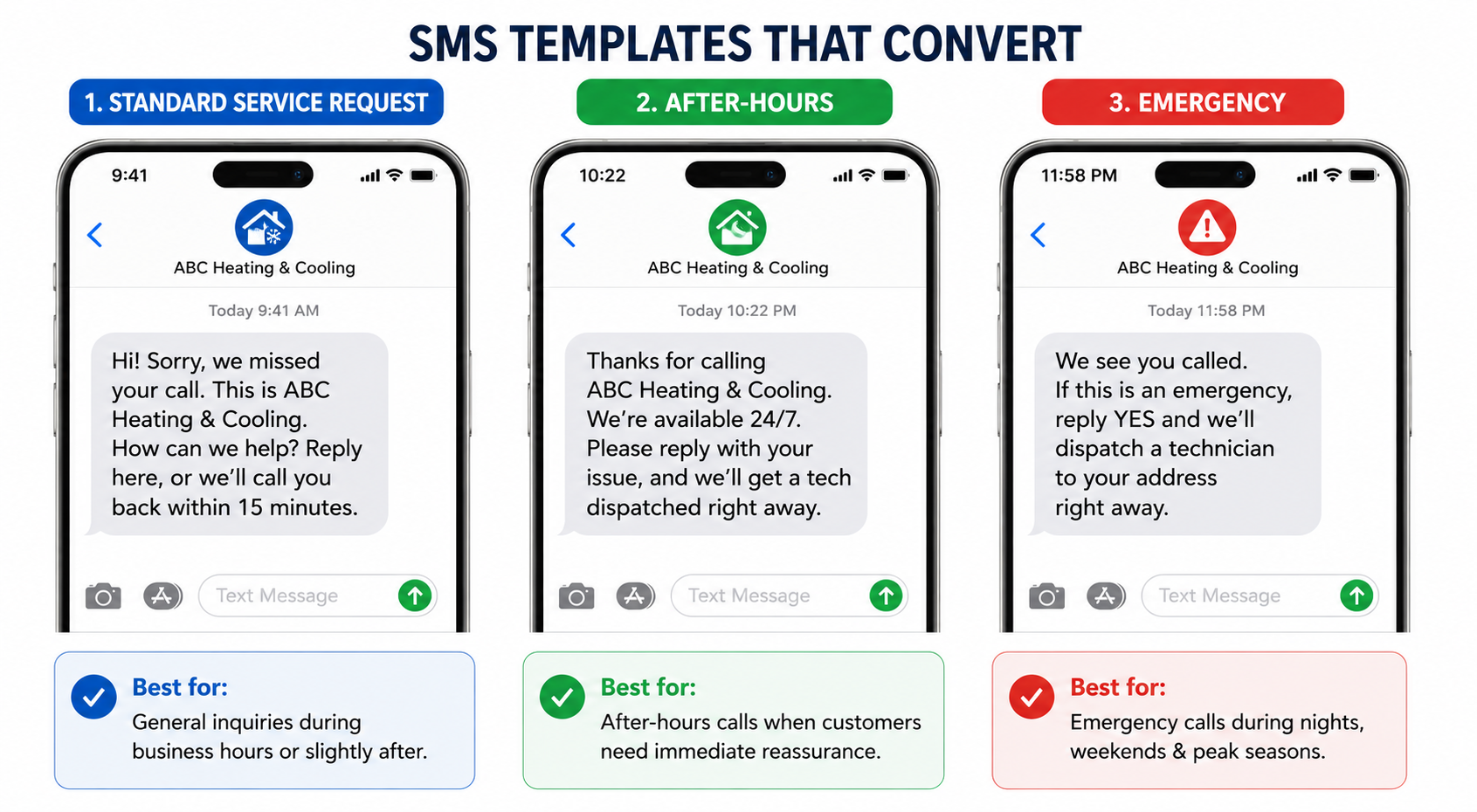
The message you send matters. Personalized texts convert 3x better than generic ones, and in HVAC, specificity signals professionalism. Here are three templates built for different scenarios.
Template 1: Standard Service Request
#quote:: "Hi! Sorry, we missed your call. This is [Business Name]. How can we help? Reply here, or we'll call you back within 15 minutes."
Clean, fast, low-friction. Works for general HVAC inquiries during business hours or slightly after. The "15-minute call back" promise creates urgency without being aggressive.
Template 2: After-Hours
#quote:: "Thanks for calling [Business Name]. We're available 24/7. Please, reply with your issue, and we'll get a tech dispatched right away."
This one is critical. The caller who rings at 10 PM is often dealing with a real problem. The "24/7" signal and "get a tech dispatched" language tell them immediately that help is coming. Don't make them wonder if anyone saw their call.
Template 3: Emergency
#quote:: "We see you called. If this is an emergency, reply YES, and we'll dispatch a technician to your address right away."
One-tap response. Designed to convert in seconds. Use this as your after-hours default during summer AC season and winter heating season, the two windows when emergency calls peak.
Missed Call Text Back vs. AI Answering Service: What's the Difference?
This is the question worth asking before you spend money on either.
[table]
 | Missed Call Text Back | AI Answering Service
What it does | Sends SMS after a missed call | Answers the call so it's never missed
Timing | Reactive (after the miss) | Proactive (before the miss)
CRM integration | Rarely | Yes (HCP, ServiceTitan, Jobber, FieldEdge)
Books jobs | No | Yes
Handles SMS conversation | Sometimes (platform-dependent) | Yes
After-hours coverage | Text only | Full call + text
Monthly cost | $49–$300+ | Flat rate, all-in
[/table]
The honest answer: you need both. An AI answering service handles 95%+ of calls without a miss. Missed call text back catches the remaining edge cases: the caller who hung up in the first two seconds, the dropped connection, the double-tap dial.
The best-in-class setup isn't choosing between them. It's a system where the AI answers first, texts back as a failsafe, and handles the entire conversation through to booking.
That's what Donna does, and it's not a text-back tool with an AI add-on. It's an AI office manager that includes text-back as one layer of a multi-channel system covering calls, SMS, website chat, and WhatsApp.
The Bottom Line
Missed calls are expensive. An unanswered HVAC call isn't just a lost conversation. It's $350–$500 walking out the door, often straight to a competitor who picked up the phone.
Missed call text back is the minimum standard in 2026. Every HVAC company should have it. But the businesses that will dominate their local market aren't just texting back after the miss. They're running systems that prevent the miss in the first place, and then text back as a backup.
That combination of AI answering, automatic text back, full SMS conversation, and CRM booking is how you convert inbound traffic into booked jobs without adding a person to your payroll.